Transforming Locust Plagues into Textile Raw Materials

Jul 25, 2025 By

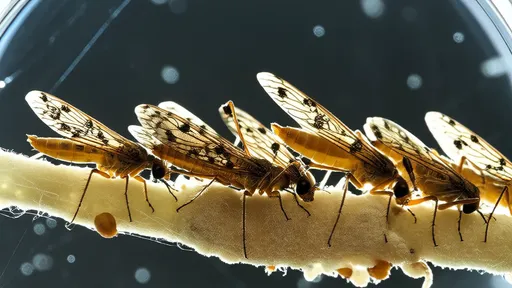
The recent discovery of converting locust protein fibers into textile raw materials has sparked significant interest in both scientific and industrial circles. This innovative approach not only addresses the environmental challenges posed by locust swarms but also opens up new possibilities for sustainable fabric production. Researchers have found that the protein fibers extracted from locusts possess remarkable strength and flexibility, making them a viable alternative to traditional textile materials.

Locust swarms have long been a menace to agriculture, causing widespread devastation to crops across continents. However, scientists are now looking at these pests through a different lens. By harnessing the protein-rich fibers from locusts, they aim to transform a global nuisance into a valuable resource. The process involves carefully extracting and refining the protein filaments, which are then spun into threads suitable for weaving.

The potential applications of locust-derived textiles are vast. From high-performance sportswear to medical bandages, the unique properties of these fibers offer numerous advantages. Unlike synthetic materials, locust protein fibers are biodegradable and require less energy to produce. This makes them an attractive option for eco-conscious consumers and manufacturers alike.

One of the most compelling aspects of this innovation is its scalability. Locust swarms often consist of billions of individuals, providing an abundant source of raw material. In regions frequently affected by locust infestations, this could create new economic opportunities for local communities. Instead of viewing locusts solely as a threat, farmers and entrepreneurs might soon see them as a valuable commodity.

However, challenges remain in perfecting the extraction and processing techniques. The current methods are still in the experimental stage, and researchers are working to improve efficiency and reduce costs. Additionally, there are questions about consumer acceptance—will people be willing to wear clothing made from insects? Market studies suggest that as awareness of environmental issues grows, so too does openness to alternative materials.

The textile industry is under increasing pressure to adopt more sustainable practices. Traditional cotton farming consumes vast amounts of water, while synthetic fibers contribute to microplastic pollution. Locust protein fibers present a promising solution to these problems. If successfully commercialized, they could revolutionize the way we think about both pest control and fabric production.

Several startups and research institutions are already investing in this technology. Pilot projects in East Africa and Southeast Asia are testing the feasibility of large-scale locust fiber production. Early results are encouraging, with prototypes demonstrating durability comparable to conventional textiles. The next step involves refining the manufacturing process to meet industry standards.

Beyond textiles, locust protein fibers may have applications in other fields. Biomedical researchers are exploring their potential for use in wound dressings and surgical sutures. The fibers' natural biocompatibility and strength make them ideal for these purposes. This versatility further enhances the economic viability of locust-based materials.

Critics argue that promoting locust harvesting could inadvertently encourage the proliferation of these insects. However, experts counter that controlled collection during swarm events would not impact overall populations. Moreover, the financial incentive to harvest locusts might lead to more effective monitoring and control of outbreaks.

The cultural significance of this innovation should not be overlooked. In many societies, insects have traditionally been used as food sources. Expanding their use to textiles represents a natural progression in human-insect relationships. As with any emerging technology, education and awareness campaigns will be crucial in gaining public acceptance.

Looking ahead, the development of locust protein fibers could serve as a model for other waste-to-resource initiatives. It demonstrates how creative thinking can turn environmental challenges into opportunities. With continued research and investment, what was once considered a plague may soon become a prized raw material in the global textile market.

The journey from pest to fabric is still in its early stages, but the potential is undeniable. As climate change intensifies and resources become scarcer, such innovations will become increasingly valuable. The locust fiber story reminds us that sometimes, the solutions to our most pressing problems can come from the most unexpected places.

Recommend Posts
Fashion

Recycled Tires into High Heels: Re-purposing Automotive Waste for Shoe Heels

By /Jul 25, 2025

The fashion industry has long been criticized for its environmental footprint, but a new wave of designers is turning waste into wearable art. Among the most innovative developments is the transformation of discarded car tires into striking high-heel shoes. This unexpected marriage of automotive waste and haute couture is redefining what it means to walk sustainably.
Fashion

Holographic Scent Projection: Real-time Digital Fragrance Synthesis

By /Jul 25, 2025

The realm of sensory technology has taken a revolutionary leap with the advent of holographic scent projection, a groundbreaking innovation that merges digital precision with olfactory artistry. This cutting-edge technology, often referred to as digital fragrance synthesis, enables the real-time creation and dispersion of scents through holographic interfaces. Unlike traditional methods of scent delivery, which rely on physical compounds and diffusion mechanisms, holographic scent projection manipulates airborne molecules using focused energy fields to construct intricate aromatic profiles on demand.
Fashion

Instant Dry Raincoat Folding Art: Self-Rolling Compression Device

By /Jul 25, 2025

In the fast-paced world of outdoor gear innovation, the self-rolling compression system for instant-dry rainwear has emerged as a game-changer for adventurers and urban commuters alike. This ingenious design eliminates the age-old struggle of stuffing rain jackets into cramped backpacks or dealing with bulky carrying cases. The technology behind these compact systems combines material science with intuitive engineering, creating a seamless user experience that feels almost magical the first time you witness it in action.
Fashion

Tactile Feedback Gloves: Virtual Shopping to Sense Fabric Textures

By /Jul 25, 2025

The retail landscape is undergoing a quiet revolution, one that promises to bridge the gap between digital convenience and the irreplaceable sensory experience of physical shopping. At the heart of this transformation lies an unassuming yet groundbreaking innovation: haptic feedback gloves. These sleek, technologically advanced wearables are redefining virtual shopping by allowing users to feel the texture of fabrics before making a purchase—all from the comfort of their homes.
Fashion

Repurposed Fishing Nets into Optical Grade Plastic for Eyewear Frames

By /Jul 25, 2025

The ocean’s plastic crisis has long been a symbol of humanity’s unsustainable relationship with the environment. Yet, amid the growing urgency to address this ecological disaster, innovators are finding ways to transform waste into wonder. One such breakthrough comes in the form of eyewear frames crafted from discarded fishing nets—a fusion of sustainability and high-performance design that challenges traditional manufacturing norms. This isn’t just recycling; it’s a reimagining of how marine debris can meet the precision demands of optical-grade applications.
Fashion

Goryeo Celadon Crackle Algorithm for Texture Generation

By /Jul 25, 2025

The art of celadon ceramics has long been revered as one of Korea's most significant cultural achievements, with the delicate crackle patterns of Goryeo dynasty celadon standing as a testament to centuries of masterful craftsmanship. In recent years, researchers and digital artists have turned their attention to recreating these intricate crackle textures through algorithmic generation, blending ancient artistry with cutting-edge computational techniques.
Fashion

Transforming Locust Plagues into Textile Raw Materials

By /Jul 25, 2025

The recent discovery of converting locust protein fibers into textile raw materials has sparked significant interest in both scientific and industrial circles. This innovative approach not only addresses the environmental challenges posed by locust swarms but also opens up new possibilities for sustainable fabric production. Researchers have found that the protein fibers extracted from locusts possess remarkable strength and flexibility, making them a viable alternative to traditional textile materials.
Fashion

Resurrection of Western Xia Ceramic Patterns: Digital Reconstruction of Tangut Tribal Motifs

By /Jul 25, 2025

In the vast expanse of China's northwestern regions, buried beneath centuries of shifting sands and forgotten histories, lies the artistic legacy of the Tangut people. Once a formidable force in the medieval world, the Western Xia Dynasty (1038–1227) left behind fragments of its culture in the form of exquisite ceramics adorned with intricate patterns. Today, a groundbreaking digital reconstruction project is breathing new life into these ancient designs, offering a window into the artistic soul of a civilization long vanished.
Fashion

Cell Agriculture Fur: Cultivation in Bioreactors

By /Jul 25, 2025

The fashion industry stands at the precipice of a revolution, one that could redefine luxury while addressing growing ethical and environmental concerns. At the heart of this transformation lies cellular agriculture fur—a groundbreaking innovation that promises to deliver the opulence of traditional fur without the associated moral dilemmas or ecological footprint. Unlike conventional fur production, which relies on animal farming, this cutting-edge approach harnesses the power of biotechnology to grow genuine fur in controlled laboratory environments.
Fashion

Magnetic Sensitivity Jewelry: Latitude and Longitude-Triggered Color Change

By /Jul 25, 2025

In an era where technology and fashion increasingly intersect, a groundbreaking innovation has emerged that bridges the gap between science and style. Magnetic field-responsive jewelry that changes color based on Earth's latitude and longitude represents not just a fashion statement, but a wearable piece of geolocative art. These pieces don’t just adorn the body—they interact with the planet itself, creating a dynamic relationship between wearer and environment.
Fashion

Anti-Dog Hair Adhesion Coat: Electrostatic Shielding Fabric

By /Jul 25, 2025

In the eternal battle between pet owners and stubborn pet hair clinging to clothing, a revolutionary fabric technology has emerged as a game-changer. Static-shielding fabrics, once primarily used in industrial and electronic applications, are now making waves in the fashion world as the ultimate defense against dog hair adhesion. This innovation couldn't have come at a better time, as more households embrace furry companions while maintaining active professional and social lives that demand polished appearances.
Fashion

The Legend of the Inca City of Gold and its Gilded Techniques

By /Jul 25, 2025

The legend of El Dorado, the mythical city of gold hidden deep within the South American jungles, has captivated explorers and historians for centuries. While the existence of such a city remains unproven, the story itself reveals fascinating insights into the advanced metallurgical techniques of the Inca civilization, particularly their mastery of gilding and gold plating. The term "El Dorado" originally referred not to a place, but to a person—the "Gilded One," a Muisca tribal chief who coated himself in gold dust during sacred ceremonies. This ritual, though symbolic, hints at a deeper cultural understanding of gold’s transformative power, both spiritually and technologically.
Fashion

Plasma Anhydrous Dyeing: Gas Ionization Coloring

By /Jul 25, 2025

The textile industry stands on the brink of a technological revolution as plasma-based waterless dyeing emerges as a sustainable alternative to traditional coloring methods. This innovative approach, known as gas ionization coloring, harnesses the unique properties of plasma to achieve vibrant hues without consuming vast quantities of water or generating toxic runoff. Laboratories across Europe and Asia report unprecedented success in binding pigments at the molecular level using fourth-state matter, potentially rendering obsolete the centuries-old practice of boiling fabrics in chemical baths.
Fashion

Meteorite Powder Coating: Fashionizing Space Materials

By /Jul 25, 2025

The fashion industry has always been a realm of boundless creativity, where designers push the limits of materials and aesthetics to create something truly extraordinary. In recent years, a surprising new trend has emerged—one that blends haute couture with celestial wonder. The use of meteorite powder coatings in fashion is not just a fleeting gimmick; it represents a fusion of science, art, and storytelling that captivates both wearers and observers alike.
Fashion

Mayan Calendar Stamps: Translating Ancient Civilization Codes into Visual Symbols

By /Jul 25, 2025

The ancient Maya civilization left behind a rich legacy of knowledge encoded in their intricate calendar systems and symbolic imagery. Among their most fascinating contributions is the Mayan calendar印花—a complex visual language that transcends mere timekeeping to reveal profound cosmological insights. These vibrant印花 patterns, once reserved for priestly elites, now captivate modern scholars and designers alike as they bridge the gap between sacred mathematics and contemporary visual culture.
Fashion

Ultrasonic Cutting Technique: Precise Frequency Vibration for Material Separation

By /Jul 25, 2025

In an era where precision manufacturing dictates industrial competitiveness, a groundbreaking technology is quietly transforming how we cut and shape materials. Acoustic vibration cutting, or sonic wave material separation, represents a paradigm shift from traditional mechanical cutting methods. This innovative approach harnesses the power of precisely calibrated sound waves to achieve clean, energy-efficient cuts across various materials with micron-level accuracy.
Fashion

Infrasound Belt: Frequency Device for Anxiety Relief

By /Jul 25, 2025

In a world where stress and anxiety have become pervasive, innovative solutions are emerging to help individuals find relief. One such breakthrough is the infrasonic waistband, a wearable device designed to harness the power of low-frequency sound waves to promote relaxation and mental well-being. Unlike traditional methods, this technology operates on the principle that specific frequencies can interact with the body’s natural rhythms, offering a non-invasive way to combat anxiety.
Fashion

Persian Astronomical Star Chart Embroidery

By /Jul 25, 2025

The art of celestial cartography has long been a bridge between science and aesthetics, and nowhere is this more evident than in the exquisite tradition of Persian astronomical embroidery. These intricate star maps, painstakingly stitched onto textiles, represent a unique fusion of mathematical precision and artistic expression that flourished particularly during the golden age of Islamic astronomy between the 9th and 15th centuries.
Fashion

Quantum Flaw Detection: Photonic Scanning for Nanoscale Errors

By /Jul 25, 2025

The realm of quantum-level defect detection has entered uncharted territory with the advent of photon-scanning nanoscale error analysis. This groundbreaking approach is redefining precision in materials science, semiconductor manufacturing, and photonics engineering. Unlike conventional microscopy or spectroscopy techniques, photon-scanning probes interact with subatomic particles to reveal imperfections invisible to other methodologies.
Fashion

Gustatory Synchronization Scarf: Microcapsules Release Regional Flavors"

By /Jul 25, 2025

In an era where multisensory experiences dominate consumer trends, a groundbreaking innovation has emerged at the intersection of fashion and gastronomy: flavor-synchronized scarves. These seemingly ordinary accessories conceal a remarkable technological secret – microscopic capsules that release region-specific aromas when stimulated by saliva enzymes during wear. The brainchild of a transdisciplinary team from Milan and Kyoto, this invention promises to transport wearers on an olfactory journey through the world's culinary landscapes without ever leaving their doorstep.