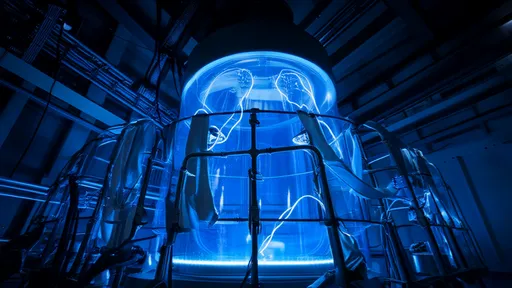
The realm of sensory technology has taken a revolutionary leap with the advent of holographic scent projection, a groundbreaking innovation that merges digital precision with olfactory artistry. This cutting-edge technology, often referred to as digital fragrance synthesis, enables the real-time creation and dispersion of scents through holographic interfaces. Unlike traditional methods of scent delivery, which rely on physical compounds and diffusion mechanisms, holographic scent projection manipulates airborne molecules using focused energy fields to construct intricate aromatic profiles on demand.
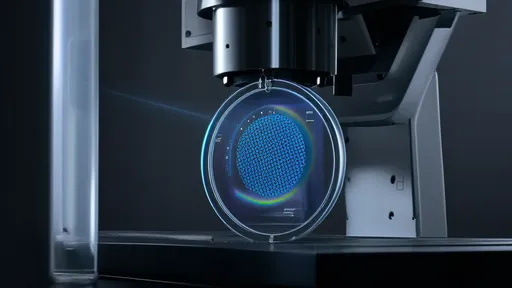
At the heart of this technology lies a sophisticated interplay of chemistry, physics, and computational algorithms. By leveraging advanced machine learning models, researchers have developed systems capable of analyzing and replicating the molecular structures of virtually any scent. These systems then project holographic fields that interact with specialized substrates or even the air itself, triggering the release of specific odor molecules in precise combinations. The result is an immersive, dynamic olfactory experience that can be tailored instantaneously to match visual or auditory stimuli.
The implications of holographic scent projection extend far beyond novelty applications. In the entertainment industry, filmmakers and game developers are exploring ways to incorporate synchronized scentscapes that evolve with narrative progression. Imagine watching a nature documentary where the crisp aroma of pine forests or the salty tang of ocean spray materializes in perfect harmony with the visuals. Similarly, virtual reality platforms stand to gain unprecedented levels of immersion through multi-sensory integration, potentially revolutionizing therapeutic applications like exposure therapy for phobias or PTSD treatment.
Retail and marketing sectors have taken keen interest in this technology's potential to create memorable brand experiences. High-end boutiques could project signature fragrances that subtly shift as customers move through different sections, while restaurants might enhance dining experiences with perfectly timed aroma accents that complement each course. Early adopters report significant increases in customer engagement and emotional connection when holographic scents are incorporated into physical spaces. This phenomenon aligns with neurological research demonstrating how scent triggers powerful memory and emotional responses more directly than other senses.
Scientific communities are particularly excited about the environmental benefits of digital fragrance synthesis. Traditional scent production often involves harvesting rare botanical materials or synthesizing complex chemical compounds, processes that can be ecologically damaging. Holographic alternatives promise drastic reductions in resource consumption and waste generation. Moreover, the technology enables precise control over scent dispersion, eliminating the issue of residual odors that plague conventional air fresheners and perfumery applications. This precision could prove invaluable in sensitive environments like hospitals or laboratories where specific atmospheric conditions must be maintained.
Technical challenges remain before widespread adoption becomes feasible. Current systems face limitations in scent complexity and duration, with most prototypes capable of projecting only basic aromatic profiles for short periods. Researchers are working to expand the "olfactory palette" by developing more sophisticated molecular excitation techniques and improving the stability of holographic scent fields. Another hurdle involves creating standardized protocols for digital scent encoding, allowing for consistent reproduction across different hardware platforms - a challenge akin to establishing color calibration standards in digital imaging.
Ethical considerations have emerged alongside the technology's development. Questions arise about scent pollution in public spaces and the potential for olfactory manipulation in advertising or social engineering contexts. Regulatory frameworks will need to address these concerns while balancing innovation opportunities. Some privacy advocates warn about the possibility of scent-based data collection, where olfactory signatures could be used to track individuals or gather biometric information without consent.
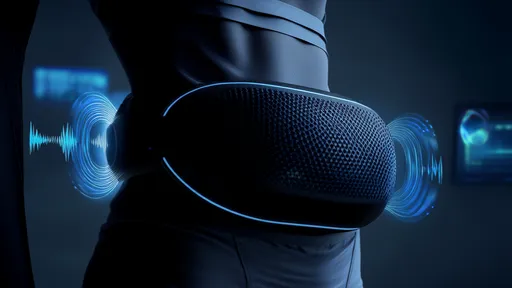
Looking ahead, the convergence of holographic scent projection with other emerging technologies paints an intriguing future. Integration with Internet of Things ecosystems could enable smart homes that adjust fragrances based on time of day, weather, or occupants' emotional states. Combined with biometric feedback systems, therapeutic applications might automatically calibrate stress-reducing aromas in response to physiological indicators. The technology's evolution may eventually lead to personal scent synthesizers - devices that allow individuals to create and share custom fragrances as easily as we now share digital photos or music playlists.
Pioneering companies in this space are taking varied approaches to commercialization. Some focus on enterprise solutions for large venues and retailers, while others develop compact systems for consumer use. The military and aerospace industries have shown interest in applications ranging from stress reduction in confined environments to enhanced situational awareness through scent-based alerts. Meanwhile, cultural institutions see potential for enriching exhibits and performances with historically accurate or artistically conceptualized olfactory dimensions.
As research progresses, holographic scent projection stands poised to redefine our relationship with the olfactory world. This technology doesn't merely replicate existing scent experiences but opens possibilities for entirely new forms of aromatic expression that were previously unimaginable. From enhancing human wellbeing to creating novel artistic mediums, the digital synthesis of fragrance represents more than a technical achievement - it signifies a fundamental expansion of human sensory capability and creative potential. The coming years will undoubtedly witness remarkable innovations as this fascinating field continues to mature and find its place in our daily lives.
By /Jul 25, 2025

By /Jul 25, 2025

By /Jul 25, 2025
By /Jul 25, 2025

By /Jul 25, 2025

By /Jul 25, 2025
By /Jul 25, 2025

By /Jul 25, 2025
By /Jul 25, 2025

By /Jul 25, 2025

By /Jul 25, 2025

By /Jul 25, 2025
By /Jul 25, 2025

By /Jul 25, 2025

By /Jul 25, 2025

By /Jul 25, 2025
By /Jul 25, 2025

By /Jul 25, 2025
By /Jul 25, 2025

By /Jul 25, 2025
