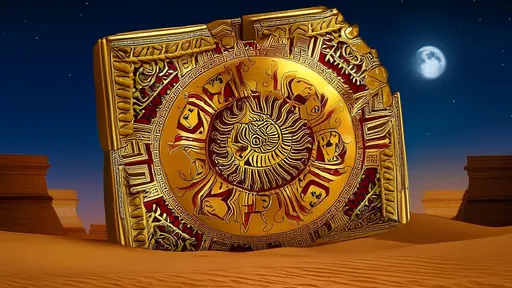
In the vast expanse of China's northwestern regions, buried beneath centuries of shifting sands and forgotten histories, lies the artistic legacy of the Tangut people. Once a formidable force in the medieval world, the Western Xia Dynasty (1038–1227) left behind fragments of its culture in the form of exquisite ceramics adorned with intricate patterns. Today, a groundbreaking digital reconstruction project is breathing new life into these ancient designs, offering a window into the artistic soul of a civilization long vanished.
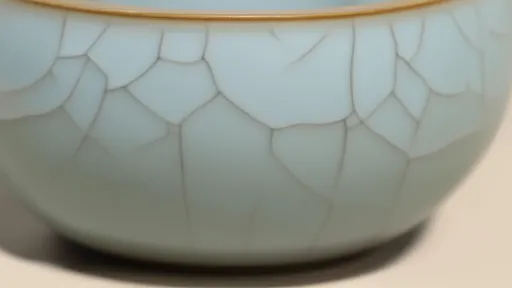
The Tangut people, known for their unique script and Buddhist devotion, developed a distinctive ceramic tradition that blended influences from Central Asia, Tibet, and Han Chinese cultures. Their pottery, often overlooked in mainstream art history, featured geometric precision and symbolic motifs that reflected their nomadic roots and Buddhist beliefs. The patterns—ranging from stylized floral arrangements to complex cosmological diagrams—served as visual narratives of their worldview.
Archaeologists and digital artists have joined forces to piece together this visual puzzle. Using high-resolution scans of ceramic fragments unearthed from Western Xia tombs and temple sites, the team employs advanced photogrammetry to create 3D models of the original artifacts. Machine learning algorithms then analyze the partial patterns, predicting the complete designs based on stylistic consistency across multiple fragments. The result is a digital archive of reconstructed patterns that would have otherwise been lost to time.
One particularly fascinating aspect of this project is how it reveals the Tangut's sophisticated color palette. Contrary to the monochromatic appearance of aged ceramics, the digital reconstructions show vibrant combinations of iron-red, cobalt-blue, and golden-ochre pigments. These colors, now faded on the original pieces, once created striking visual contrasts that must have dazzled contemporary viewers. The team's pigment analysis suggests the Tangut potters developed unique glaze formulas to achieve these effects.
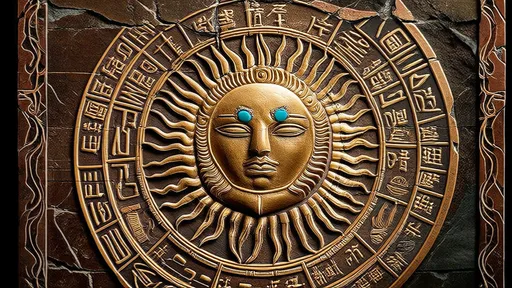
The symbolic language embedded in these patterns tells a story of cultural exchange. Some motifs clearly derive from Central Asian textile designs, while others show the influence of Song Dynasty ceramics. Yet the Tangut artists transformed these borrowed elements into something distinctly their own. A recurring "flaming pearl" motif, for example, appears to represent the fusion of Buddhist sacred imagery with indigenous shamanistic beliefs about the sun's power.
This digital resurrection goes beyond mere academic interest. Contemporary designers and artists are already drawing inspiration from the reconstructed patterns, incorporating Tangut motifs into modern textiles, digital art, and even architectural elements. In Ningxia—the autonomous region where many Western Xia relics were found—local artisans are using these digital references to revive traditional ceramic techniques that had nearly disappeared.
The project also raises profound questions about cultural preservation in the digital age. While some scholars argue that no digital reproduction can capture the material essence of historical artifacts, others counter that such reconstructions make cultural heritage accessible in ways physical conservation cannot. The team has made their digital models available through open-access platforms, allowing people worldwide to study and appreciate these designs without the limitations of museum visits or fragile artifact handling.
Perhaps most remarkably, the digital reconstructions have helped solve longstanding mysteries about Western Xia artifacts in museum collections worldwide. Several pieces previously labeled as "possibly Tangut" have been conclusively identified through pattern matching with the reconstructed designs. This has led to the reattribution of important works in major museum collections from London to Tokyo.
As the project continues, researchers are turning their attention to the social context of these ceramics. By mapping pattern variations across different archaeological sites, they hope to trace the movement of artisans and the development of regional styles within the Western Xia realm. Early results suggest a surprising diversity of local workshops, each putting their own spin on shared design traditions.
The digital resurrection of Tangut ceramic patterns represents more than technological achievement—it's an act of cultural reclamation. For a people whose written records were largely destroyed after the Mongol conquest, these reconstructed designs offer a rare glimpse into their aesthetic values and daily life. As the project expands to include virtual reality experiences that allow users to "handle" these reconstructed ceramics in immersive environments, the boundaries between past and present, physical and digital, continue to blur in fascinating ways.
In bringing these patterns back to life, we don't just recover lost art—we restore a connection to the creative spirit of the Tangut people, ensuring their visual language continues to speak across the centuries.

By /Jul 25, 2025

By /Jul 25, 2025

By /Jul 25, 2025

By /Jul 25, 2025

By /Jul 25, 2025
By /Jul 25, 2025

By /Jul 25, 2025
By /Jul 25, 2025

By /Jul 25, 2025

By /Jul 25, 2025

By /Jul 25, 2025
By /Jul 25, 2025
By /Jul 25, 2025

By /Jul 25, 2025
By /Jul 25, 2025

By /Jul 25, 2025

By /Jul 25, 2025
By /Jul 25, 2025
By /Jul 25, 2025

By /Jul 25, 2025
