Gustatory Synchronization Scarf: Microcapsules Release Regional Flavors"

Jul 25, 2025 By

In an era where multisensory experiences dominate consumer trends, a groundbreaking innovation has emerged at the intersection of fashion and gastronomy: flavor-synchronized scarves. These seemingly ordinary accessories conceal a remarkable technological secret – microscopic capsules that release region-specific aromas when stimulated by saliva enzymes during wear. The brainchild of a transdisciplinary team from Milan and Kyoto, this invention promises to transport wearers on an olfactory journey through the world's culinary landscapes without ever leaving their doorstep.

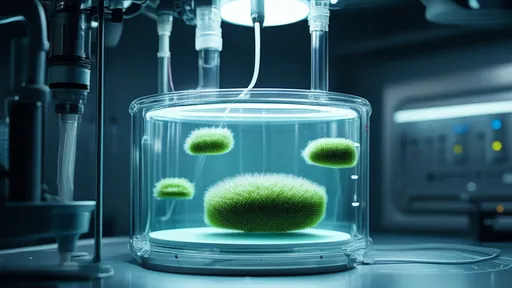
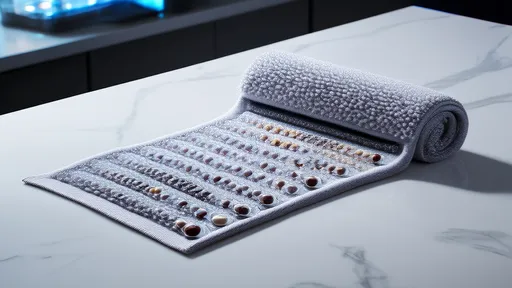
The science behind these scarves draws from decades of research in microencapsulation technology, previously employed in industries ranging from pharmaceuticals to agriculture. By embedding flavor compounds within polymer shells measuring just 3-5 microns in diameter, developers have created textiles capable of preserving delicate aromatic profiles for months. When the scarf's corner is gently moistened and pressed to the tongue – a gesture reminiscent of childhood fabric-chewing habits – the capsules rupture in a controlled cascade, releasing their flavorful payload.

What sets these garments apart is their meticulous attention to terroir authenticity. The development team spent two years collaborating with master perfumers and Michelin-starred chefs to capture the essence of specific locations. A Provençal lavender field scarf doesn't simply smell floral; it unfolds in stages – first the herbal top notes, then the earthy undertones of sun-baked soil, finally revealing a whisper of sea salt carried by the Mistral wind. Similarly, a Kyoto matcha variant progresses from initial grassy freshness to the deep umami of shaded tea leaves, finishing with the subtle woodiness of traditional stone grinding.

The manufacturing process presents fascinating technical challenges. Unlike conventional scented textiles that rely on surface coatings, these scarves require flavor capsules to be integrated directly into polymer fibers during extrusion. This ensures even distribution and prevents the "hotspot" effect where certain areas become overly concentrated. The team developed a proprietary cold-spinning technique that preserves volatile organic compounds typically destroyed by high-temperature processing. Each scarf contains approximately 8 million microcapsules per square inch, with a total payload equivalent to just 0.3% of the fabric's weight.

From a cultural perspective, the project raises intriguing questions about wearable nostalgia. Early adopters report powerful Proustian moments when encountering childhood flavors unexpectedly. A Brazilian expatriate described weeping when her scarf released the exact aroma of street-roasted cashews from her hometown's market. This emotional dimension has attracted attention from psychologists studying how taste-triggered memories differ from those activated by visual or auditory cues. Preliminary findings suggest flavor memories may access deeper layers of autobiographical recollection.

The commercial potential extends beyond individual consumers. High-end hotels have expressed interest in creating signature scarves for guests, encoding the scent of their signature cocktails or house-made pastries. Several museums are collaborating on exhibition-specific designs – imagine tasting ancient Roman garum sauce while viewing archaeological artifacts. Even the medical field sees applications; oncology units are testing scarves that counteract metallic taste perceptions during chemotherapy with comforting flavor profiles.

Environmental considerations have been paramount throughout development. The microcapsules use biodegradable polymers derived from crustacean shells and plant cellulose. Unlike conventional fragrance microbeads that persist in ecosystems, these break down within six months in marine conditions. The scarves themselves incorporate recycled silk and organic cotton, with natural dyes chosen specifically not to interfere with the flavor compounds. Production occurs in small batches using renewable energy, reflecting the team's commitment to sustainability.

Looking ahead, researchers are exploring adaptive versions that could respond to physiological signals. A scarf that detects elevated stress hormones might release calming chamomile and honey notes, while one tuned to circadian rhythms could provide invigorating citrus bursts during afternoon slumps. More ambitious prototypes involve weather-reactive systems where rain activates petrichor capsules or cold temperatures trigger the release of spiced cider aromas. The ultimate goal is creating textiles that don't just reflect environments, but dynamically interact with them.

Critics initially dismissed the concept as gimmicky, but market response tells a different story. The first limited edition of 500 scarves sold out within 37 minutes, with secondary market prices tripling within weeks. What began as an art-school experiment has evolved into a legitimate new category at the intersection of fashion technology and experiential design. As one early reviewer noted: "It's not about replacing meals, but about making the space between them richer. I'll never look at my wardrobe the same way again."

The implications for future human-textile interaction are profound. In an increasingly digital world, these scarves represent a countertrend – tactile objects that engage our most primal sense in subtle, personal ways. They challenge conventional boundaries between clothing and consumption, between adornment and nourishment. As the technology matures, we may find entire outfits becoming flavor palettes, with coordinated "tasting menus" of textures and tastes. For now, these humble scarves offer something rare: a way to literally wrap ourselves in memories, places, and sensations previously confined to plates and glasses.
Recommend Posts
Fashion

Recycled Tires into High Heels: Re-purposing Automotive Waste for Shoe Heels

By /Jul 25, 2025

The fashion industry has long been criticized for its environmental footprint, but a new wave of designers is turning waste into wearable art. Among the most innovative developments is the transformation of discarded car tires into striking high-heel shoes. This unexpected marriage of automotive waste and haute couture is redefining what it means to walk sustainably.
Fashion

Holographic Scent Projection: Real-time Digital Fragrance Synthesis

By /Jul 25, 2025

The realm of sensory technology has taken a revolutionary leap with the advent of holographic scent projection, a groundbreaking innovation that merges digital precision with olfactory artistry. This cutting-edge technology, often referred to as digital fragrance synthesis, enables the real-time creation and dispersion of scents through holographic interfaces. Unlike traditional methods of scent delivery, which rely on physical compounds and diffusion mechanisms, holographic scent projection manipulates airborne molecules using focused energy fields to construct intricate aromatic profiles on demand.
Fashion

Instant Dry Raincoat Folding Art: Self-Rolling Compression Device

By /Jul 25, 2025

In the fast-paced world of outdoor gear innovation, the self-rolling compression system for instant-dry rainwear has emerged as a game-changer for adventurers and urban commuters alike. This ingenious design eliminates the age-old struggle of stuffing rain jackets into cramped backpacks or dealing with bulky carrying cases. The technology behind these compact systems combines material science with intuitive engineering, creating a seamless user experience that feels almost magical the first time you witness it in action.
Fashion

Tactile Feedback Gloves: Virtual Shopping to Sense Fabric Textures

By /Jul 25, 2025

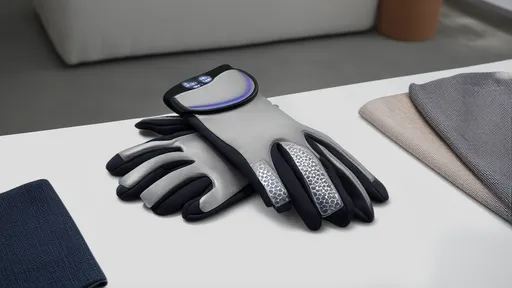
The retail landscape is undergoing a quiet revolution, one that promises to bridge the gap between digital convenience and the irreplaceable sensory experience of physical shopping. At the heart of this transformation lies an unassuming yet groundbreaking innovation: haptic feedback gloves. These sleek, technologically advanced wearables are redefining virtual shopping by allowing users to feel the texture of fabrics before making a purchase—all from the comfort of their homes.
Fashion

Repurposed Fishing Nets into Optical Grade Plastic for Eyewear Frames

By /Jul 25, 2025

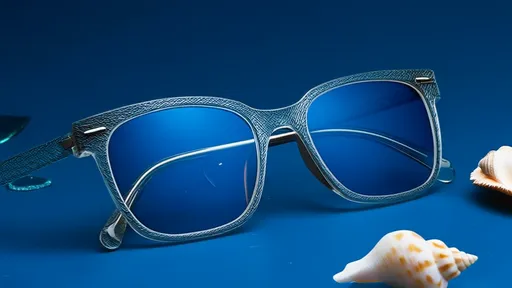
The ocean’s plastic crisis has long been a symbol of humanity’s unsustainable relationship with the environment. Yet, amid the growing urgency to address this ecological disaster, innovators are finding ways to transform waste into wonder. One such breakthrough comes in the form of eyewear frames crafted from discarded fishing nets—a fusion of sustainability and high-performance design that challenges traditional manufacturing norms. This isn’t just recycling; it’s a reimagining of how marine debris can meet the precision demands of optical-grade applications.
Fashion

Goryeo Celadon Crackle Algorithm for Texture Generation

By /Jul 25, 2025

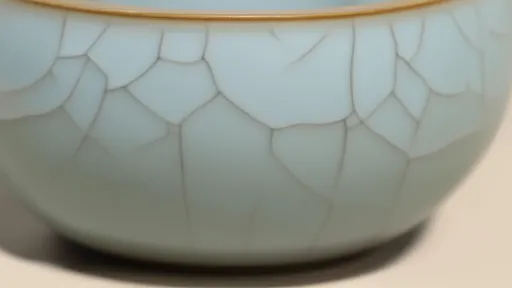
The art of celadon ceramics has long been revered as one of Korea's most significant cultural achievements, with the delicate crackle patterns of Goryeo dynasty celadon standing as a testament to centuries of masterful craftsmanship. In recent years, researchers and digital artists have turned their attention to recreating these intricate crackle textures through algorithmic generation, blending ancient artistry with cutting-edge computational techniques.
Fashion

Transforming Locust Plagues into Textile Raw Materials

By /Jul 25, 2025

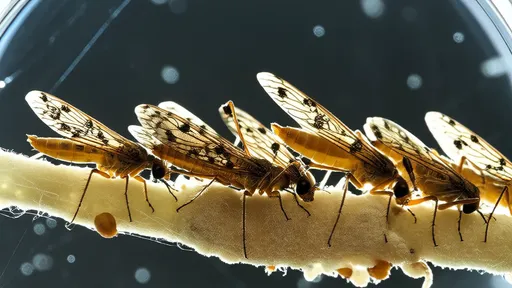
The recent discovery of converting locust protein fibers into textile raw materials has sparked significant interest in both scientific and industrial circles. This innovative approach not only addresses the environmental challenges posed by locust swarms but also opens up new possibilities for sustainable fabric production. Researchers have found that the protein fibers extracted from locusts possess remarkable strength and flexibility, making them a viable alternative to traditional textile materials.
Fashion

Resurrection of Western Xia Ceramic Patterns: Digital Reconstruction of Tangut Tribal Motifs

By /Jul 25, 2025

In the vast expanse of China's northwestern regions, buried beneath centuries of shifting sands and forgotten histories, lies the artistic legacy of the Tangut people. Once a formidable force in the medieval world, the Western Xia Dynasty (1038–1227) left behind fragments of its culture in the form of exquisite ceramics adorned with intricate patterns. Today, a groundbreaking digital reconstruction project is breathing new life into these ancient designs, offering a window into the artistic soul of a civilization long vanished.
Fashion

Cell Agriculture Fur: Cultivation in Bioreactors

By /Jul 25, 2025

The fashion industry stands at the precipice of a revolution, one that could redefine luxury while addressing growing ethical and environmental concerns. At the heart of this transformation lies cellular agriculture fur—a groundbreaking innovation that promises to deliver the opulence of traditional fur without the associated moral dilemmas or ecological footprint. Unlike conventional fur production, which relies on animal farming, this cutting-edge approach harnesses the power of biotechnology to grow genuine fur in controlled laboratory environments.
Fashion

Magnetic Sensitivity Jewelry: Latitude and Longitude-Triggered Color Change

By /Jul 25, 2025

In an era where technology and fashion increasingly intersect, a groundbreaking innovation has emerged that bridges the gap between science and style. Magnetic field-responsive jewelry that changes color based on Earth's latitude and longitude represents not just a fashion statement, but a wearable piece of geolocative art. These pieces don’t just adorn the body—they interact with the planet itself, creating a dynamic relationship between wearer and environment.
Fashion

Anti-Dog Hair Adhesion Coat: Electrostatic Shielding Fabric

By /Jul 25, 2025

In the eternal battle between pet owners and stubborn pet hair clinging to clothing, a revolutionary fabric technology has emerged as a game-changer. Static-shielding fabrics, once primarily used in industrial and electronic applications, are now making waves in the fashion world as the ultimate defense against dog hair adhesion. This innovation couldn't have come at a better time, as more households embrace furry companions while maintaining active professional and social lives that demand polished appearances.
Fashion

The Legend of the Inca City of Gold and its Gilded Techniques

By /Jul 25, 2025

The legend of El Dorado, the mythical city of gold hidden deep within the South American jungles, has captivated explorers and historians for centuries. While the existence of such a city remains unproven, the story itself reveals fascinating insights into the advanced metallurgical techniques of the Inca civilization, particularly their mastery of gilding and gold plating. The term "El Dorado" originally referred not to a place, but to a person—the "Gilded One," a Muisca tribal chief who coated himself in gold dust during sacred ceremonies. This ritual, though symbolic, hints at a deeper cultural understanding of gold’s transformative power, both spiritually and technologically.
Fashion

Plasma Anhydrous Dyeing: Gas Ionization Coloring

By /Jul 25, 2025

The textile industry stands on the brink of a technological revolution as plasma-based waterless dyeing emerges as a sustainable alternative to traditional coloring methods. This innovative approach, known as gas ionization coloring, harnesses the unique properties of plasma to achieve vibrant hues without consuming vast quantities of water or generating toxic runoff. Laboratories across Europe and Asia report unprecedented success in binding pigments at the molecular level using fourth-state matter, potentially rendering obsolete the centuries-old practice of boiling fabrics in chemical baths.
Fashion

Meteorite Powder Coating: Fashionizing Space Materials

By /Jul 25, 2025

The fashion industry has always been a realm of boundless creativity, where designers push the limits of materials and aesthetics to create something truly extraordinary. In recent years, a surprising new trend has emerged—one that blends haute couture with celestial wonder. The use of meteorite powder coatings in fashion is not just a fleeting gimmick; it represents a fusion of science, art, and storytelling that captivates both wearers and observers alike.
Fashion

Mayan Calendar Stamps: Translating Ancient Civilization Codes into Visual Symbols

By /Jul 25, 2025

The ancient Maya civilization left behind a rich legacy of knowledge encoded in their intricate calendar systems and symbolic imagery. Among their most fascinating contributions is the Mayan calendar印花—a complex visual language that transcends mere timekeeping to reveal profound cosmological insights. These vibrant印花 patterns, once reserved for priestly elites, now captivate modern scholars and designers alike as they bridge the gap between sacred mathematics and contemporary visual culture.
Fashion

Ultrasonic Cutting Technique: Precise Frequency Vibration for Material Separation

By /Jul 25, 2025

In an era where precision manufacturing dictates industrial competitiveness, a groundbreaking technology is quietly transforming how we cut and shape materials. Acoustic vibration cutting, or sonic wave material separation, represents a paradigm shift from traditional mechanical cutting methods. This innovative approach harnesses the power of precisely calibrated sound waves to achieve clean, energy-efficient cuts across various materials with micron-level accuracy.
Fashion

Infrasound Belt: Frequency Device for Anxiety Relief

By /Jul 25, 2025

In a world where stress and anxiety have become pervasive, innovative solutions are emerging to help individuals find relief. One such breakthrough is the infrasonic waistband, a wearable device designed to harness the power of low-frequency sound waves to promote relaxation and mental well-being. Unlike traditional methods, this technology operates on the principle that specific frequencies can interact with the body’s natural rhythms, offering a non-invasive way to combat anxiety.
Fashion

Persian Astronomical Star Chart Embroidery

By /Jul 25, 2025

The art of celestial cartography has long been a bridge between science and aesthetics, and nowhere is this more evident than in the exquisite tradition of Persian astronomical embroidery. These intricate star maps, painstakingly stitched onto textiles, represent a unique fusion of mathematical precision and artistic expression that flourished particularly during the golden age of Islamic astronomy between the 9th and 15th centuries.
Fashion

Quantum Flaw Detection: Photonic Scanning for Nanoscale Errors

By /Jul 25, 2025

The realm of quantum-level defect detection has entered uncharted territory with the advent of photon-scanning nanoscale error analysis. This groundbreaking approach is redefining precision in materials science, semiconductor manufacturing, and photonics engineering. Unlike conventional microscopy or spectroscopy techniques, photon-scanning probes interact with subatomic particles to reveal imperfections invisible to other methodologies.
Fashion

Gustatory Synchronization Scarf: Microcapsules Release Regional Flavors"

By /Jul 25, 2025

In an era where multisensory experiences dominate consumer trends, a groundbreaking innovation has emerged at the intersection of fashion and gastronomy: flavor-synchronized scarves. These seemingly ordinary accessories conceal a remarkable technological secret – microscopic capsules that release region-specific aromas when stimulated by saliva enzymes during wear. The brainchild of a transdisciplinary team from Milan and Kyoto, this invention promises to transport wearers on an olfactory journey through the world's culinary landscapes without ever leaving their doorstep.