Mayan Calendar Stamps: Translating Ancient Civilization Codes into Visual Symbols

Jul 25, 2025 By

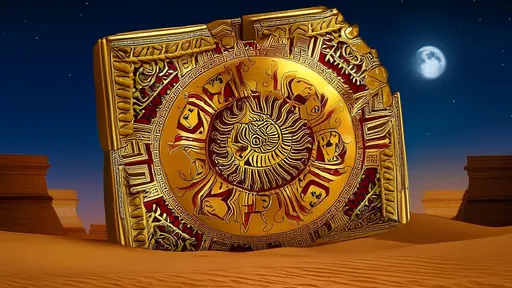
The ancient Maya civilization left behind a rich legacy of knowledge encoded in their intricate calendar systems and symbolic imagery. Among their most fascinating contributions is the Mayan calendar印花—a complex visual language that transcends mere timekeeping to reveal profound cosmological insights. These vibrant印花 patterns, once reserved for priestly elites, now captivate modern scholars and designers alike as they bridge the gap between sacred mathematics and contemporary visual culture.

At the heart of this fascination lies the Tzolk'in—the 260-day sacred calendar whose interlocking gears of 13 numbers and 20 day signs create a fractal-like harmony. The印花 manifestations of these calculations appear across temple walls, ceramic vessels, and surviving codices, where numerical values transform into serpents, jaguars, and celestial bodies. What modern eyes might perceive as decorative motifs actually constitute sophisticated philosophical equations about the cyclical nature of existence.

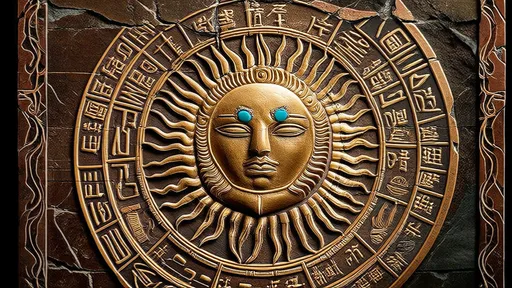
Deciphering these visual codes requires understanding the Maya's unique worldview, where time wasn't linear but a spiral of repeating energies. The印花 patterns frequently incorporate the kinh (sun) symbol intertwined with lunar crescents, representing the perpetual dance between celestial bodies. Water motifs flow through these designs not merely as decorative elements but as embodiments of the sacred life force ch'ulel, demonstrating how the Maya embedded hydrological knowledge into their timekeeping systems.

Contemporary graphic designers have begun adapting these ancient印花 principles into modern visual communication. The logarithmic spirals found in the Dresden Codex's Venus tables, for instance, inspire dynamic data visualization techniques. Meanwhile, the ajaw (lord) glyph's perfect geometric proportions inform cutting-edge typography. This cross-pollination between archaeology and design has birthed an entirely new aesthetic language—one that carries the intellectual weight of Mesoamerican epistemology while speaking to digital-native audiences.

Recent breakthroughs in epigraphy have revealed how certain印花 patterns function as mnemonic devices for astronomical calculations. The so-called "Galactic Butterfly" motif found at Palenque, long considered decorative, has been decoded as a three-dimensional matrix for predicting lunar eclipses. Such discoveries underscore how the Maya transformed complex mathematical operations into elegant visual shorthand—a feat that challenges our modern dichotomy between STEM and artistic expression.

The chromatic symbolism within these印花 designs carries equally profound meanings. Maya blue—the legendary pigment that withstands centuries—doesn't merely represent water in their visual language, but encodes specific agricultural cycles tied to the rainy season. Red ochre stripes in calendar印花 often correspond to solar zenith passages, while the strategic placement of black carbon lines marks the "dark intervals" between ceremonial periods. This polychrome system operates as a sophisticated information architecture that modern UX designers are only beginning to appreciate.

Perhaps most remarkably, the印花 patterns demonstrate an inherent scalability that predates digital design principles by millennia. A single day glyph can expand into an intricate narrative scene when examined closely, yet reduce to a crisp minimalist symbol at small sizes—a quality that makes these ancient designs surprisingly adaptable to mobile interfaces and responsive web design. The Maya achieved this through their recursive design philosophy, where micro and macrocosms mirror each other in perfect symmetry.

As archaeologists continue scanning undiscovered codices with multispectral imaging, new印花 variations emerge that challenge our understanding of Pre-Columbian visual communication. The recently uncovered "Codex Hidden River" reveals previously unknown calendar印花 that incorporate topographic elements, suggesting the Maya mapped temporal cycles onto actual landscapes. This discovery hints at an even more sophisticated spatial-temporal visualization system than previously imagined—one that may inspire entirely new approaches to data mapping.

The enduring power of these印花 designs lies in their dual nature as both precise scientific instruments and profound artistic expressions. In an era hungry for meaningful visual languages that transcend cultural barriers, the Maya's calendrical symbols offer something rare—a bridge between ancient wisdom and digital modernity, where every curve and dot carries the weight of centuries of astronomical observation and philosophical contemplation. As we continue decoding their secrets, we don't just reconstruct an ancient system—we rediscover timeless principles of visual communication that still pulse with vitality today.
Recommend Posts
Fashion

Recycled Tires into High Heels: Re-purposing Automotive Waste for Shoe Heels

By /Jul 25, 2025

The fashion industry has long been criticized for its environmental footprint, but a new wave of designers is turning waste into wearable art. Among the most innovative developments is the transformation of discarded car tires into striking high-heel shoes. This unexpected marriage of automotive waste and haute couture is redefining what it means to walk sustainably.
Fashion

Holographic Scent Projection: Real-time Digital Fragrance Synthesis

By /Jul 25, 2025

The realm of sensory technology has taken a revolutionary leap with the advent of holographic scent projection, a groundbreaking innovation that merges digital precision with olfactory artistry. This cutting-edge technology, often referred to as digital fragrance synthesis, enables the real-time creation and dispersion of scents through holographic interfaces. Unlike traditional methods of scent delivery, which rely on physical compounds and diffusion mechanisms, holographic scent projection manipulates airborne molecules using focused energy fields to construct intricate aromatic profiles on demand.
Fashion

Instant Dry Raincoat Folding Art: Self-Rolling Compression Device

By /Jul 25, 2025

In the fast-paced world of outdoor gear innovation, the self-rolling compression system for instant-dry rainwear has emerged as a game-changer for adventurers and urban commuters alike. This ingenious design eliminates the age-old struggle of stuffing rain jackets into cramped backpacks or dealing with bulky carrying cases. The technology behind these compact systems combines material science with intuitive engineering, creating a seamless user experience that feels almost magical the first time you witness it in action.
Fashion

Tactile Feedback Gloves: Virtual Shopping to Sense Fabric Textures

By /Jul 25, 2025

The retail landscape is undergoing a quiet revolution, one that promises to bridge the gap between digital convenience and the irreplaceable sensory experience of physical shopping. At the heart of this transformation lies an unassuming yet groundbreaking innovation: haptic feedback gloves. These sleek, technologically advanced wearables are redefining virtual shopping by allowing users to feel the texture of fabrics before making a purchase—all from the comfort of their homes.
Fashion

Repurposed Fishing Nets into Optical Grade Plastic for Eyewear Frames

By /Jul 25, 2025

The ocean’s plastic crisis has long been a symbol of humanity’s unsustainable relationship with the environment. Yet, amid the growing urgency to address this ecological disaster, innovators are finding ways to transform waste into wonder. One such breakthrough comes in the form of eyewear frames crafted from discarded fishing nets—a fusion of sustainability and high-performance design that challenges traditional manufacturing norms. This isn’t just recycling; it’s a reimagining of how marine debris can meet the precision demands of optical-grade applications.
Fashion

Goryeo Celadon Crackle Algorithm for Texture Generation

By /Jul 25, 2025

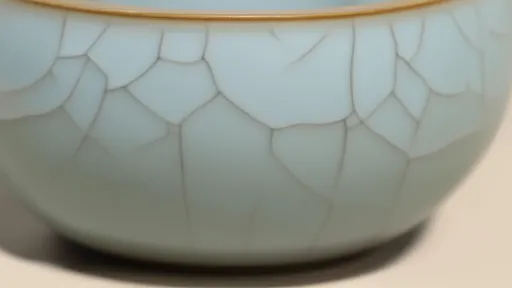
The art of celadon ceramics has long been revered as one of Korea's most significant cultural achievements, with the delicate crackle patterns of Goryeo dynasty celadon standing as a testament to centuries of masterful craftsmanship. In recent years, researchers and digital artists have turned their attention to recreating these intricate crackle textures through algorithmic generation, blending ancient artistry with cutting-edge computational techniques.
Fashion

Transforming Locust Plagues into Textile Raw Materials

By /Jul 25, 2025

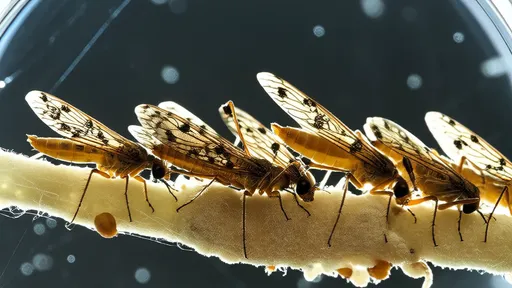
The recent discovery of converting locust protein fibers into textile raw materials has sparked significant interest in both scientific and industrial circles. This innovative approach not only addresses the environmental challenges posed by locust swarms but also opens up new possibilities for sustainable fabric production. Researchers have found that the protein fibers extracted from locusts possess remarkable strength and flexibility, making them a viable alternative to traditional textile materials.
Fashion

Resurrection of Western Xia Ceramic Patterns: Digital Reconstruction of Tangut Tribal Motifs

By /Jul 25, 2025

In the vast expanse of China's northwestern regions, buried beneath centuries of shifting sands and forgotten histories, lies the artistic legacy of the Tangut people. Once a formidable force in the medieval world, the Western Xia Dynasty (1038–1227) left behind fragments of its culture in the form of exquisite ceramics adorned with intricate patterns. Today, a groundbreaking digital reconstruction project is breathing new life into these ancient designs, offering a window into the artistic soul of a civilization long vanished.
Fashion

Cell Agriculture Fur: Cultivation in Bioreactors

By /Jul 25, 2025

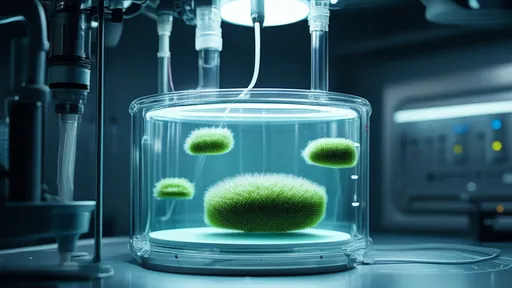
The fashion industry stands at the precipice of a revolution, one that could redefine luxury while addressing growing ethical and environmental concerns. At the heart of this transformation lies cellular agriculture fur—a groundbreaking innovation that promises to deliver the opulence of traditional fur without the associated moral dilemmas or ecological footprint. Unlike conventional fur production, which relies on animal farming, this cutting-edge approach harnesses the power of biotechnology to grow genuine fur in controlled laboratory environments.
Fashion

Magnetic Sensitivity Jewelry: Latitude and Longitude-Triggered Color Change

By /Jul 25, 2025

In an era where technology and fashion increasingly intersect, a groundbreaking innovation has emerged that bridges the gap between science and style. Magnetic field-responsive jewelry that changes color based on Earth's latitude and longitude represents not just a fashion statement, but a wearable piece of geolocative art. These pieces don’t just adorn the body—they interact with the planet itself, creating a dynamic relationship between wearer and environment.
Fashion

Anti-Dog Hair Adhesion Coat: Electrostatic Shielding Fabric

By /Jul 25, 2025

In the eternal battle between pet owners and stubborn pet hair clinging to clothing, a revolutionary fabric technology has emerged as a game-changer. Static-shielding fabrics, once primarily used in industrial and electronic applications, are now making waves in the fashion world as the ultimate defense against dog hair adhesion. This innovation couldn't have come at a better time, as more households embrace furry companions while maintaining active professional and social lives that demand polished appearances.
Fashion

The Legend of the Inca City of Gold and its Gilded Techniques

By /Jul 25, 2025

The legend of El Dorado, the mythical city of gold hidden deep within the South American jungles, has captivated explorers and historians for centuries. While the existence of such a city remains unproven, the story itself reveals fascinating insights into the advanced metallurgical techniques of the Inca civilization, particularly their mastery of gilding and gold plating. The term "El Dorado" originally referred not to a place, but to a person—the "Gilded One," a Muisca tribal chief who coated himself in gold dust during sacred ceremonies. This ritual, though symbolic, hints at a deeper cultural understanding of gold’s transformative power, both spiritually and technologically.
Fashion

Plasma Anhydrous Dyeing: Gas Ionization Coloring

By /Jul 25, 2025

The textile industry stands on the brink of a technological revolution as plasma-based waterless dyeing emerges as a sustainable alternative to traditional coloring methods. This innovative approach, known as gas ionization coloring, harnesses the unique properties of plasma to achieve vibrant hues without consuming vast quantities of water or generating toxic runoff. Laboratories across Europe and Asia report unprecedented success in binding pigments at the molecular level using fourth-state matter, potentially rendering obsolete the centuries-old practice of boiling fabrics in chemical baths.
Fashion

Meteorite Powder Coating: Fashionizing Space Materials

By /Jul 25, 2025

The fashion industry has always been a realm of boundless creativity, where designers push the limits of materials and aesthetics to create something truly extraordinary. In recent years, a surprising new trend has emerged—one that blends haute couture with celestial wonder. The use of meteorite powder coatings in fashion is not just a fleeting gimmick; it represents a fusion of science, art, and storytelling that captivates both wearers and observers alike.
Fashion

Mayan Calendar Stamps: Translating Ancient Civilization Codes into Visual Symbols

By /Jul 25, 2025

The ancient Maya civilization left behind a rich legacy of knowledge encoded in their intricate calendar systems and symbolic imagery. Among their most fascinating contributions is the Mayan calendar印花—a complex visual language that transcends mere timekeeping to reveal profound cosmological insights. These vibrant印花 patterns, once reserved for priestly elites, now captivate modern scholars and designers alike as they bridge the gap between sacred mathematics and contemporary visual culture.
Fashion

Ultrasonic Cutting Technique: Precise Frequency Vibration for Material Separation

By /Jul 25, 2025

In an era where precision manufacturing dictates industrial competitiveness, a groundbreaking technology is quietly transforming how we cut and shape materials. Acoustic vibration cutting, or sonic wave material separation, represents a paradigm shift from traditional mechanical cutting methods. This innovative approach harnesses the power of precisely calibrated sound waves to achieve clean, energy-efficient cuts across various materials with micron-level accuracy.
Fashion

Infrasound Belt: Frequency Device for Anxiety Relief

By /Jul 25, 2025

In a world where stress and anxiety have become pervasive, innovative solutions are emerging to help individuals find relief. One such breakthrough is the infrasonic waistband, a wearable device designed to harness the power of low-frequency sound waves to promote relaxation and mental well-being. Unlike traditional methods, this technology operates on the principle that specific frequencies can interact with the body’s natural rhythms, offering a non-invasive way to combat anxiety.
Fashion

Persian Astronomical Star Chart Embroidery

By /Jul 25, 2025

The art of celestial cartography has long been a bridge between science and aesthetics, and nowhere is this more evident than in the exquisite tradition of Persian astronomical embroidery. These intricate star maps, painstakingly stitched onto textiles, represent a unique fusion of mathematical precision and artistic expression that flourished particularly during the golden age of Islamic astronomy between the 9th and 15th centuries.
Fashion

Quantum Flaw Detection: Photonic Scanning for Nanoscale Errors

By /Jul 25, 2025

The realm of quantum-level defect detection has entered uncharted territory with the advent of photon-scanning nanoscale error analysis. This groundbreaking approach is redefining precision in materials science, semiconductor manufacturing, and photonics engineering. Unlike conventional microscopy or spectroscopy techniques, photon-scanning probes interact with subatomic particles to reveal imperfections invisible to other methodologies.
Fashion

Gustatory Synchronization Scarf: Microcapsules Release Regional Flavors"

By /Jul 25, 2025

In an era where multisensory experiences dominate consumer trends, a groundbreaking innovation has emerged at the intersection of fashion and gastronomy: flavor-synchronized scarves. These seemingly ordinary accessories conceal a remarkable technological secret – microscopic capsules that release region-specific aromas when stimulated by saliva enzymes during wear. The brainchild of a transdisciplinary team from Milan and Kyoto, this invention promises to transport wearers on an olfactory journey through the world's culinary landscapes without ever leaving their doorstep.