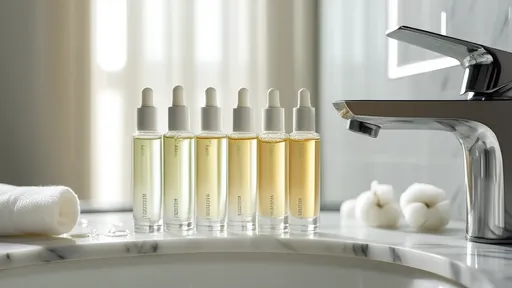
For frequent travelers, the eternal struggle of packing light while still looking presentable is all too familiar. The cosmetics bag often becomes the unexpected villain in this narrative – those tiny bottles and compacts somehow add up to a shocking amount of weight. Enter the world of cosmetic decanting tools, a niche but growing market promising to solve our luggage-weight woes without sacrificing our skincare routines or makeup looks.
The Great Decanting Experiment began when my bathroom counter disappeared under an avalanche of miniature jars, squeeze tubes, and spray bottles from over a dozen brands claiming to revolutionize travel beauty. Some came from specialty travel stores, others from the depths of Amazon's algorithm, all promising to be the ultimate solution for the product-obsessed jetsetter. What started as a simple product test quickly morphed into an obsessive quest to find which systems actually delivered on their promises – and which left me with exploded shampoo all over my carefully packed clothes.
Traditional travel containers have barely evolved since the 1990s – those leaky plastic bottles with flip-top lids that always seem to pop open at 30,000 feet. The new generation takes a markedly different approach. Silicone pods that collapse as you use product, magnetic palettes that transform powder compacts into modular systems, even pressurized spray bottles that mimic professional salon tools. The innovation level varies wildly, as does the price point, with some luxury decanting systems costing more than a checked baggage fee.
Silicone squeeze tubes emerged as the surprise MVP for thick creams and serums. Unlike their rigid plastic counterparts, these flexible containers allow you to push out every last drop of product without resorting to that awkward handstand maneuver with traditional tubes. The best performers came from a German brand specializing in medical-grade silicone – their patented valve system completely eliminated leaks during multiple transatlantic flights. The downside? At nearly $15 per tube, they represent a serious investment for what's essentially a fancy toothpaste container.
For liquids, the market has shifted toward pressurized systems originally designed for professional chefs. These stainless steel bottles with pump mechanisms create an airless environment that prevents oxidation while giving surprising control over product dispensing. I successfully transported a week's worth of toner in a 3oz bottle that normally would have required at least 6oz of packaging. The satisfying click of the magnetic cap became a little travel ritual, though the industrial aesthetic might not appeal to those who prefer their beauty tools to look, well, beautiful.
Powder products presented their own unique challenges. Loose minerals and pressed compacts tend to shatter in transit, leaving you with a makeup bag full of sparkly rubble. The solution came from an unlikely source – a Japanese stationery company that adapted their modular pencil case system for cosmetics. Their stackable metal tins with silicone gaskets kept even the most fragile eyeshadows intact through multiple baggage handlers. The system works beautifully but requires time-consuming depotting of original packaging that some beauty purists might find sacrilegious.
Perhaps the most ingenious innovation came in the form of dissolvable sheets infused with skincare actives. These postage-stamp sized products eliminate liquid altogether – just add water to release serums, toners, or even shampoo. While not exactly decanting in the traditional sense, they represent a fascinating end-run around liquid restrictions. The technology still feels slightly sci-fi; some sheets dissolved into oddly gelatinous textures, and the environmental impact of single-use sheets gave me pause. But for emergency situations or ultra-minimalist packing, they're game-changers.
After three months of testing across four continents, the conclusion became clear: the perfect universal decanting system doesn't exist. What works brilliantly for thick night creams fails miserably with runny essences. The ideal approach involves mixing and matching different systems based on your specific product lineup. My personal kit now includes silicone tubes for creams, pressurized bottles for liquids, and those brilliant Japanese tins for powders – a hybrid solution that shaved nearly 4 pounds from my typical toiletry load.
The psychological aspect of decanting proved just as fascinating as the practical results. There's something oddly satisfying about transferring products into uniform, travel-optimized containers – a visual representation of the packing process itself. My bathroom now has what I've come to call a "decanting station," where products migrate between full-size home containers and their travel counterparts like some strange cosmetic ecosystem. The ritual has become part of the trip anticipation, a calming prelude to the chaos of modern travel.
As airlines grow increasingly strict with baggage allowances and sustainability concerns push travelers toward minimalism, the decanting market shows no signs of slowing. Recent trade shows revealed prototypes for color-changing containers that indicate product expiration and self-sterilizing bottles using UV light. Whether these innovations will translate to practical solutions remains to be seen, but one thing is certain – the days of hoarding hotel freebies as makeshift travel containers are numbered. The future of travel beauty looks sleek, modular, and just possibly, a few pounds lighter.

By /Jul 25, 2025
By /Jul 25, 2025

By /Jul 25, 2025

By /Jul 25, 2025

By /Jul 25, 2025

By /Jul 25, 2025
By /Jul 25, 2025
By /Jul 25, 2025

By /Jul 25, 2025

By /Jul 25, 2025

By /Jul 25, 2025

By /Jul 25, 2025

By /Jul 25, 2025

By /Jul 25, 2025

By /Jul 25, 2025

By /Jul 25, 2025

By /Jul 25, 2025

By /Jul 25, 2025

By /Jul 25, 2025

By /Jul 25, 2025
