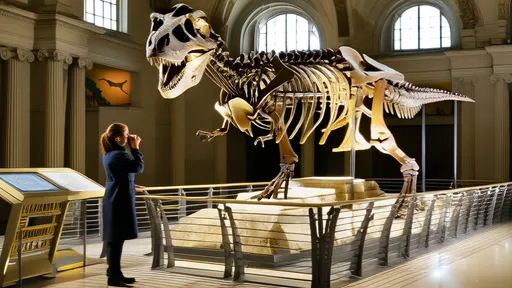
The Natural History Museum in London has long been a beacon of knowledge and wonder, drawing millions of visitors each year to its hallowed halls. Among its many treasures, the Dinosaur Gallery stands out as a crown jewel, captivating audiences with its awe-inspiring fossils and cutting-edge interactive exhibits. In recent years, the museum has elevated the visitor experience by integrating state-of-the-art interactive installations that bridge the gap between prehistoric eras and modern technology. These innovations not only educate but also immerse guests in the world of dinosaurs like never before.
One of the most striking features of the gallery is the life-sized animatronic Tyrannosaurus rex, a marvel of engineering that roars to life with startling realism. This towering predator, with its articulated limbs and piercing gaze, is more than just a static display—it responds to the movements of visitors, creating a dynamic and sometimes heart-pounding encounter. The animatronic’s fluid motions and sound effects are the result of meticulous research, ensuring that every detail, from the texture of its scales to the timbre of its growls, is scientifically accurate.
Beyond the T. rex, the gallery offers a suite of digital touchpoints designed to engage visitors of all ages. Interactive screens allow guests to explore the anatomy of various dinosaurs layer by layer, peeling back muscle, bone, and skin to understand how these creatures functioned. These displays are particularly popular with younger visitors, who delight in the hands-on approach to learning. The museum has also incorporated augmented reality (AR) stations, where visitors can use tablets or their smartphones to superimpose dinosaurs into the gallery space, watching as a Stegosaurus or Velociraptor walks alongside them.
Another standout feature is the fossil-digging simulation, which transports visitors to a virtual excavation site. Using motion-sensing technology, participants can "dig" for fossils by mimicking the movements of paleontologists. The simulation not only teaches the painstaking process of uncovering fossils but also highlights the importance of preservation and the role of museums in safeguarding these ancient relics. This exhibit has proven especially effective in sparking curiosity about paleontology as a career, with many young visitors leaving with newfound aspirations.
The gallery’s immersive soundscape further enhances the experience, enveloping visitors in the ambient noises of the Mesozoic era. From the distant calls of pterosaurs to the rustling of foliage underfoot, the audio design is carefully curated to transport guests back in time. This auditory layer, combined with the visual and tactile elements, creates a multisensory journey that makes the dinosaurs feel palpably alive. The museum’s audio team worked closely with paleontologists to ensure that the sounds, while speculative, are grounded in the latest scientific understanding of dinosaur vocalizations.
For those seeking a deeper dive, the gallery’s virtual reality (VR) experience offers a breathtaking journey through a prehistoric landscape. Strapping on a VR headset, visitors can walk among dinosaurs, witnessing their behaviors and habitats firsthand. The experience is both educational and exhilarating, blending high-tech entertainment with rigorous science. The VR program is regularly updated to reflect new discoveries, ensuring that returning visitors always have something new to explore.
The museum has also placed a strong emphasis on accessibility, ensuring that the interactive exhibits are inclusive for all visitors. Tactile models with Braille descriptions allow visually impaired guests to "see" the dinosaurs through touch, while audio guides provide detailed narrations for those who prefer auditory learning. The gallery’s design avoids overwhelming stimuli, making it welcoming for visitors with sensory sensitivities. This commitment to inclusivity has been widely praised, setting a benchmark for other institutions.
Perhaps the most poignant aspect of the gallery is its focus on storytelling. Each exhibit is crafted to tell a story—whether it’s the life and death of a particular dinosaur or the broader narrative of evolution and extinction. The interactive elements serve not as gimmicks but as tools to deepen these narratives, inviting visitors to become active participants in the story of life on Earth. This approach resonates deeply, leaving guests with not just facts but a profound connection to the natural world.
As the Natural History Museum continues to innovate, the Dinosaur Gallery remains a testament to the power of blending education with entertainment. Its interactive installations are more than just attractions; they are gateways to understanding, designed to inspire the next generation of scientists, explorers, and dreamers. In a world where technology often distracts, here it serves a higher purpose—to illuminate the past and, in doing so, enrich the present.

By /Jul 25, 2025

By /Jul 25, 2025

By /Jul 25, 2025
By /Jul 25, 2025

By /Jul 25, 2025

By /Jul 25, 2025

By /Jul 25, 2025

By /Jul 25, 2025

By /Jul 25, 2025

By /Jul 25, 2025

By /Jul 25, 2025
By /Jul 25, 2025
By /Jul 25, 2025

By /Jul 25, 2025

By /Jul 25, 2025

By /Jul 25, 2025
By /Jul 25, 2025

By /Jul 25, 2025

By /Jul 25, 2025

By /Jul 25, 2025
